Blog

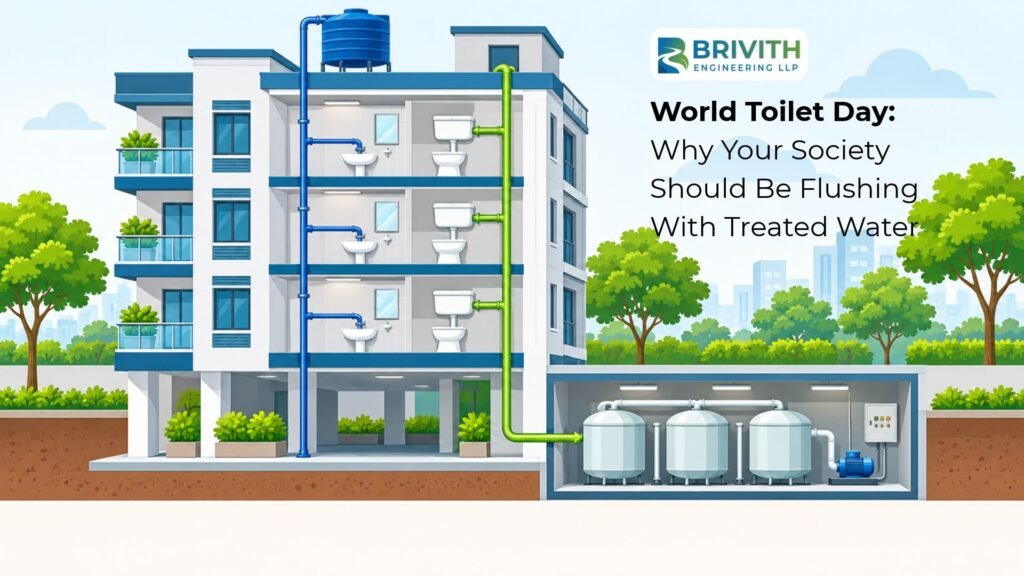
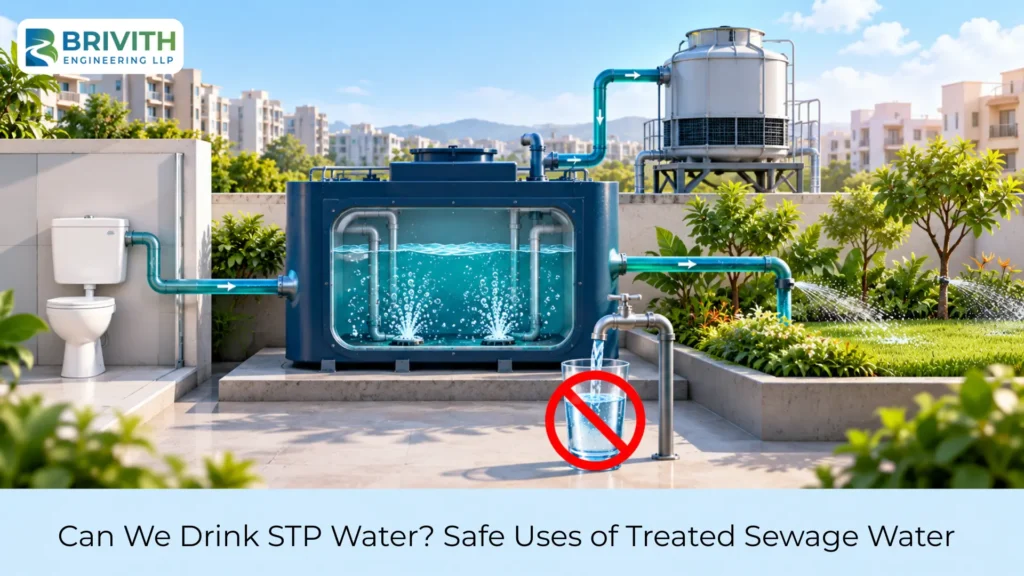
Illustration of a housing society with separate blue potable-water and green treated-water pipes connecting toilets to a sewage treatment plant

World Toilet Day: Why Your Society Should Be Flushing With Treated Water

World Toilet Day · 19 November Brivith Engineering LLP  ·  19 November 2026  ·  7 min read A working sewage treatment plant lets your society flush its toilets with treated water instead of drinking water. That single change protects a large share of the building’s fresh water supply, because Indian plumbing code IS 1172 sets

World Toilet Day: Why Your Society Should Be Flushing With Treated Water Read More »

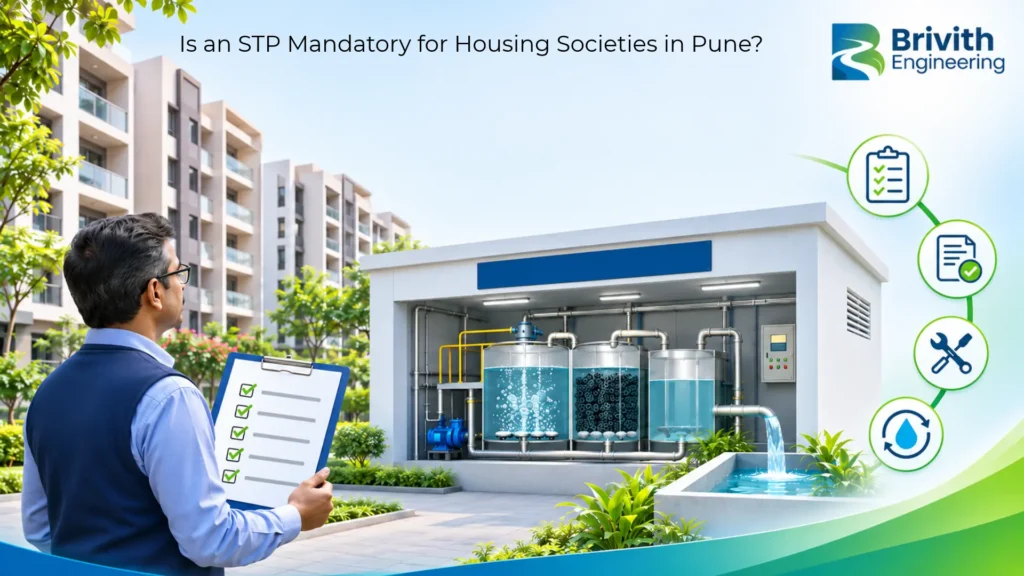
Is an STP mandatory for housing societies in Pune? Understand PMC and PCMC flat-count rules, MPCB consent, builder responsibility and 2026 penalties.

Is an STP Mandatory for Housing Societies in Pune? (2026)

STP RULES & COMPLIANCE • 2026 Is an STP Mandatory for Housing Societies in Pune? PMC, PCMC and MPCB rules explained for managing committees Brivith Engineering LLP · Updated 7 November 2026 PMCMore than 100 flats: reported civic threshold; approvals still matter. PCMCMore than 100 flats OR over 20,000 sq m: reported criteria. MPCBConsent applicability

Is an STP Mandatory for Housing Societies in Pune? (2026) Read More »

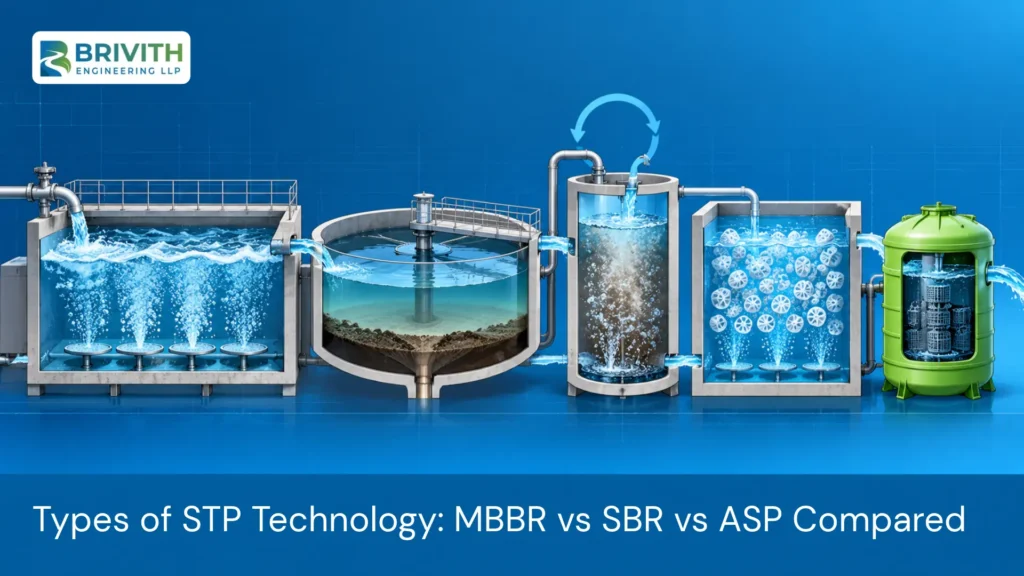
Types of STP technology compared: ASP, SBR, MBBR and BIO-DRUM MBBR tanks side by side

Types of STP Technology: MBBR vs SBR vs ASP Compared

STP | Technology Comparison Types of STP Technology: MBBR vs SBR vs ASP vs BIO-DRUM MBBR Compared Most Indian buildings use one of four types of STP technology. All four clean sewage with bacteria, but they differ sharply in space, power, odour and operator effort. Here is a neutral, side-by-side comparison, plus the 5 stages

Types of STP Technology: MBBR vs SBR vs ASP Compared Read More »

Scroll to Top