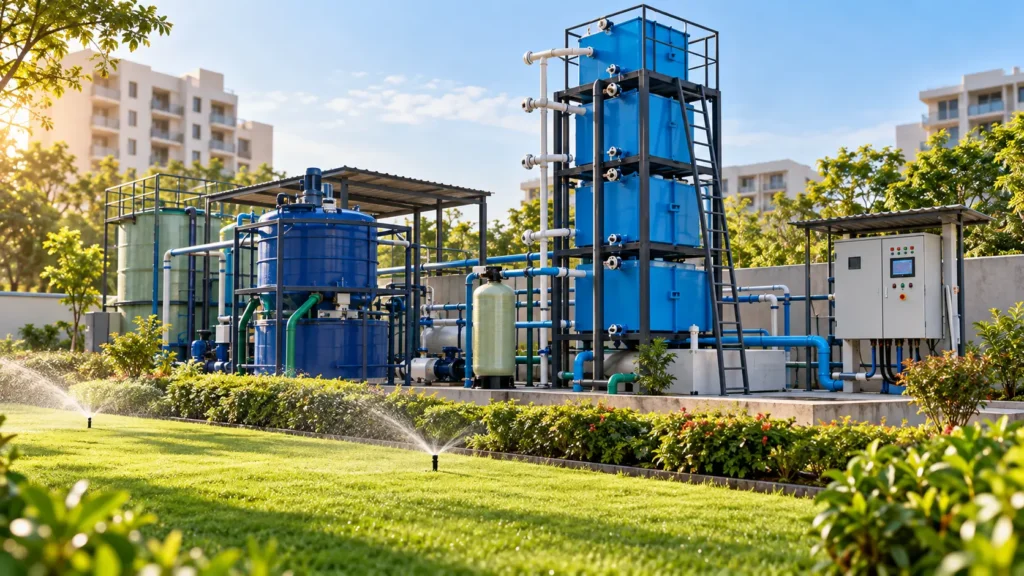
Brivith Engineering LLP designs and installs customised rainwater harvesting systems in Pune and Maharashtra for housing societies, factories and warehouses, commercial buildings, schools, hospitals, institutions and large campuses. We assess your catchment, drainage, storage needs and groundwater conditions to plan a system for your site.
Capture suitable roof runoff for planned uses, reduce dependence on external water sources where feasible, and support groundwater recharge where the site can accept it. The outcome depends on rainfall, water quality, storage and ground conditions.
Rainwater harvesting design and installation services
Rooftop Rainwater Harvesting
Connect roof collection areas through gutters and downpipes, with first-flush diversion and filtration before storage or recharge. Plan a covered storage tank, accessible cleaning points and a safe overflow route. Rainfall intensity and pipe capacity need checking as well as annual collection potential.
Groundwater Recharge Pits
Rainwater recharge pit design starts with percolation, groundwater level, catchment quality and distance from contamination sources and foundations. Graded gravel, sand or other selected media help manage sediment where appropriate. Provide inspection access and a route for overflow if the ground cannot accept incoming flow.
Borewell Recharge
Filtered rainwater may be routed through an engineered recharge arrangement after checking the borewell, aquifer conditions and contamination risks. A dry borewell alone does not demonstrate recharge suitability. Keep sewage, polluted surface runoff and industrial waste out of the recharge route.
Industrial Rainwater Harvesting
Factories, warehouses and industrial sheds can have substantial roof catchments. Review roof material, dust and process emissions, roof access, storm drainage and planned water use. Assess treatment needs and contamination risks before selecting storage or recharge.
Housing Society Rainwater Harvesting
Map rooftop drainage across buildings, available space, existing tanks and borewells, and the society’s seasonal water demand. Coordinate civil work, vehicle and resident access, maintenance responsibility and safe overflows before installation.
Rainwater Harvesting Maintenance
Clean gutters and roof collection areas, inspect first-flush devices, clean or replace filters as specified, remove accumulated silt and check overflow routes. Inspect before the monsoon and during the wet season. Use qualified workers for confined-space tasks.
For ongoing upkeep, see Brivith’s water treatment plant maintenance and service options.
What affects rainwater harvesting system cost?
A site survey is needed to establish catchment quality, drainage routes, ground conditions and the work required. Ask for an itemised quotation that covers installation and future maintenance.
- Rooftop catchment area. Roof layout, material and access affect collection points and conveyance.
- Filtration requirements. Debris, sediment and potential contamination determine pretreatment needs.
- Storage capacity. Tank location, intended use, demand and overflow affect sizing and construction.
- Recharge construction. Pit or well design depends on ground conditions, excavation and groundwater assessment.
- Piping, civil works and installation. Check pipe routes, levels, utility crossings, excavation access and restoration.
- Maintenance. Include filter servicing, silt removal and access for periodic inspection.
For a detailed explanation, use the rainwater harvesting tank capacity and cost guide.
Estimate harvestable rainwater
Harvestable Rainwater (litres) = Catchment Area (m²) × Rainfall (mm) × Runoff Coefficient
Use rainfall for the period you are assessing and a coefficient appropriate to the catchment surface. The result estimates capture potential. Storage volume and recharge capacity require separate design checks for demand, rainfall timing, overflow and infiltration.
Open the existing rainwater harvesting calculatorRoof runoff, treated sewage and stormwater need their own quality and distribution checks. For a wider water reuse plan, explore Brivith’s sewage treatment systems and guidance on treated-water reuse.
Request Free Site Assessment
Share your location, roof area if known and whether you need storage, recharge or borewell recharge. Brivith can review the information and contact you to arrange the assessment.
Contact Brivith’s team or call +91 98600 88545.
Frequently asked questions
What is the cost of rainwater harvesting in Pune?
Cost depends on catchment area, filtration, storage or recharge works, excavation, piping and access. A site survey establishes the scope and maintenance needs before Brivith provides an itemised quotation.
Is rainwater harvesting mandatory in Pune?
Rainwater harvesting requirements are linked to applicable development regulations and building approvals. Confirm the current rules, amendments and sanctioned-plan conditions with the relevant planning authority for your property before finalising the design. PMC-hosted UDCPR reference, Regulation 13.3.
How does rooftop rainwater harvesting work?
Gutters and downpipes collect roof runoff. First-flush diversion excludes the initial dirty runoff, filtration reduces debris and sediment, and the remaining water is directed to storage or a suitable recharge structure with a planned overflow.
What is the difference between rainwater storage and groundwater recharge?
Storage holds captured water in a tank for planned uses. Recharge routes suitable water into the ground where conditions permit. Annual capture potential, tank volume and the rate at which a site can accept recharge are separate design checks.
Can rainwater harvesting recharge a borewell?
A site assessment can determine whether a filtered rainwater recharge arrangement is suitable. Check water quality, groundwater level, geology and the borewell condition. Connecting an untreated drain directly to a borewell can contaminate groundwater.
How much rainwater can a housing society collect?
Multiply catchment area in square metres by rainfall in millimetres and a suitable runoff coefficient to estimate litres over the selected period. Use local rainfall data. Diversion, filtration, overflow and storage constraints reduce usable collection.
How often should rainwater harvesting filters be cleaned?
Inspect before the monsoon and during use, especially after heavy rain or visible debris accumulation. Clean filters and remove silt when inspection or reduced flow indicates a need, following the installed system’s maintenance instructions.
What information is needed for a rainwater harvesting quotation?
Share the location, property type, roof area if known, drainage drawings, existing storage and borewell details, intended use and access constraints. Photos can help Brivith plan the survey.
Can factories install rainwater harvesting systems?
Yes, suitable roof areas can be assessed for collection and storage. Industrial roof contamination and nearby chemical or waste handling must be reviewed before choosing treatment or a recharge route. Keep process effluent separate.
Which rainwater harvesting system is suitable for Pune’s soil and rock conditions?
Selection requires site-specific checks of soil permeability, underlying rock and fractures, groundwater levels and available space. A recharge pit may suit one site while storage or a different recharge arrangement suits another. A standard pit drawing alone cannot establish suitability.
Protect Every Drop. Make Industries Water Positive.