Organic Waste Compost Machine: Turn Wet Waste Into Compost On-Site
Close the Loop. Turn Waste Into a Resource.
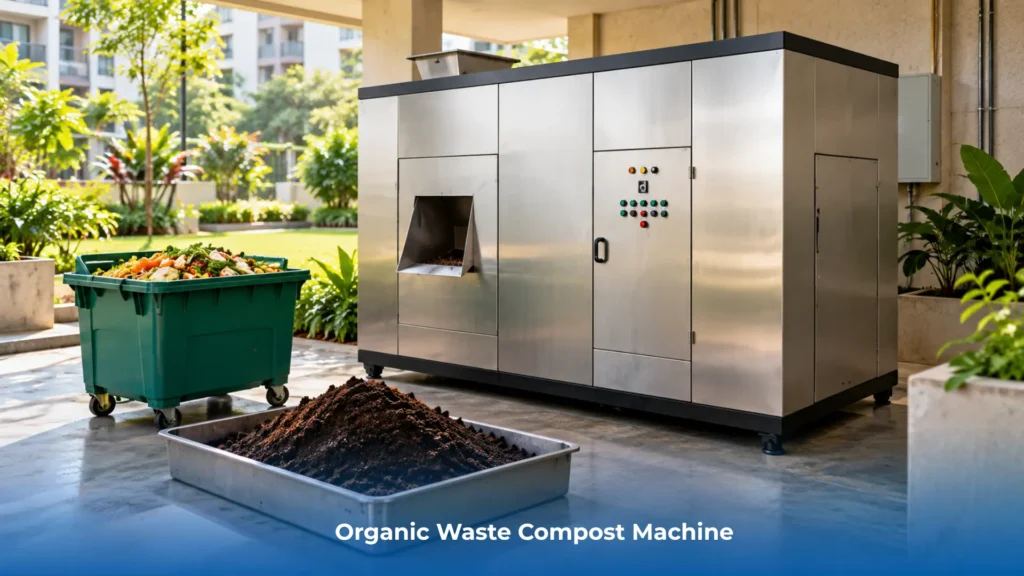
An organic waste compost machine (OWC) converts kitchen, food and garden waste into compost right where it is generated. It shreds, mixes, heats and aerates wet waste in a controlled drum, so the material breaks down far faster than in an open compost pit.
Brivith Engineering supplies organic waste compost machines from 25 kg/day to 2000 kg/day for housing societies, hotels, institutions and campuses. This guide explains how the machine works, how to size it and what it takes to run it well.
What is an organic waste compost machine?
An organic waste compost machine is an enclosed unit that speeds up natural composting under controlled conditions. It typically combines a shredder, a mixing drum, heating and aeration in one system.
Instead of sending wet waste to a landfill, the building processes it on its own premises. As a result, the society or campus cuts transport, avoids smelly waste storage and produces compost for its own gardens.
How does an organic waste compost machine work?
An organic waste compost machine works in five stages, from segregated waste to finished compost. For example, the flow below shows a typical process.
Machine cycle time and curing period vary by model, waste mix and moisture content. Therefore, we set operating routines on-site during commissioning and train your staff accordingly.
What can you put in an organic waste compost machine?
You can put most biodegradable kitchen and garden waste in an organic waste compost machine. However, non-organic material damages the machine and spoils the compost.
| Suitable | Keep Out |
|---|---|
| Vegetable and fruit peels | Plastic, including bags and wrappers |
| Cooked food leftovers | Glass, metal and ceramics |
| Tea leaves and coffee grounds | Sanitary and medical waste |
| Flowers and temple waste | Batteries, e-waste and chemicals |
| Small quantities of garden waste | Large stones, wood and construction debris |
However, items such as bones, shells and large quantities of oily food depend on the machine model. Therefore, follow the operating guidance we provide at commissioning.
Why do societies and hotels need on-site composting?
Societies and hotels need on-site composting because wet waste is heavy, smelly and expensive to transport. Beyond cost, regulations increasingly expect large generators to process it at source.
India’s Solid Waste Management Rules, 2016 place responsibility on bulk waste generators to segregate waste and manage biodegradable waste, preferably on-site where feasible. In addition, many municipal corporations enforce this through their own bylaws. The Ministry of Environment, Forest and Climate Change publishes the rules, and your local municipal body can confirm current requirements.
How do you choose the right compost machine capacity?
You choose the right organic waste compost machine capacity by measuring your actual wet waste, not by estimating it. To do this, follow these steps.
- Weigh wet waste daily for one to two weeks to find your real average.
- Note peak days, such as weekends, festivals or events.
- Add a growth margin for new flats, rooms or occupancy.
- Check available space, power supply and ventilation for the machine area.
- Plan who will operate it and how compost will be used or distributed.
An undersized machine overflows and creates odour. On the other hand, an oversized one wastes power and capital. In practice, a short measurement period avoids both problems.
Where is an organic waste compost machine used?
An organic waste compost machine is used anywhere a building produces steady volumes of food and garden waste. For instance, common users include the following.
Residential Societies
Meet bulk generator norms and green the campus.
Hotels and Resorts
Handle large kitchen waste volumes daily.
Educational Institutions
Manage canteen and hostel waste responsibly.
Hospitals
Process segregated kitchen waste from canteens.
Corporate and IT Campuses
Support ESG goals with visible action.
Industrial Canteens
Cut waste hauling from staff kitchens.
What are the benefits of an organic waste compost machine?
An organic waste compost machine reduces waste costs, supports compliance and gives you a useful product. Specifically, it offers these benefits.
- Less waste to landfill, which lowers transport and handling costs.
- Cleaner premises with no open storage of rotting food waste.
- Free compost for gardens, landscaping and terrace farming.
- Compliance support with waste management rules for bulk generators.
- Green credentials for ESG reports and green building programmes.
Why choose Brivith for your organic waste compost machine?
Brivith treats composting as part of a complete sustainability system, alongside STP, rainwater harvesting and water treatment. That joined-up view helps societies and campuses plan once and save more.
- Right-sized machines from 25 kg/day to 2000 kg/day.
- Site planning for space, drainage, ventilation and power.
- Operator training so segregation and loading stay consistent.
- Dedicated AMC support to keep the machine running smoothly.
- One partner for water, wastewater and waste solutions, backed by 25+ years of experience.
Key Takeaways
- An organic waste compost machine turns kitchen and garden waste into compost on-site.
- It shreds, mixes, heats and aerates waste, followed by a curing period.
- Brivith machines range from 25 kg/day to 2000 kg/day for societies, hotels and institutions.
- Measure real wet waste for one to two weeks before choosing capacity.
- Explore our solutions on the Products page.
Frequently Asked Questions
What is the price of an organic waste compost machine?
The price depends on capacity, build material and features such as shredding and automation. A 25 kg/day unit costs far less than a 2000 kg/day machine. Brivith quotes after understanding your daily wet waste and site conditions.
How long does an OWC machine take to make compost?
Machine cycle time and curing period vary by model, waste mix and moisture. The machine speeds up decomposition, and the output then cures before it becomes finished compost.
Does an organic waste compost machine smell?
A correctly sized and operated machine with good segregation should not create a nuisance odour. Most odour problems come from overloading, poor segregation or wrong moisture balance.
Is on-site composting mandatory for housing societies?
Under the Solid Waste Management Rules, 2016, bulk waste generators must segregate waste and manage biodegradable waste, preferably on-site. Local definitions and enforcement vary, so check with your municipal corporation.
What can we do with the compost produced?
You can use the compost in society gardens, landscaping, terrace farms and potted plants. Some societies also share it with residents.
How much space does a compost machine need?
Space depends on capacity and the curing area needed. Smaller units fit in a covered corner, while larger machines need a dedicated shed with drainage and ventilation.
Ready to process wet waste on-site?
Tell us your daily wet waste and available space. We will recommend the right machine capacity and help you set up a clean, odour-free composting routine.
Protect Every Drop. Make Industries Water Positive.