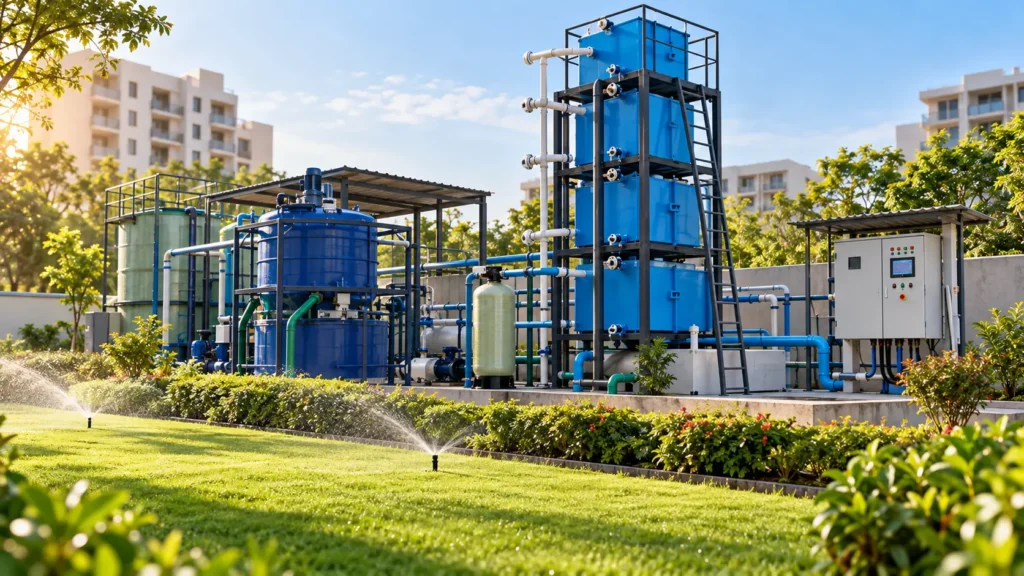
Rain Water Harvesting System: How It Works, Types and Real Benefits
Save Rainwater Today. Secure Water for Tomorrow.
A rain water harvesting system collects rainwater from rooftops and open areas, filters it, and then stores it or sends it back into the ground to recharge groundwater. It turns monsoon runoff into a water asset instead of a drainage problem.
With groundwater levels falling across many parts of India, rainwater harvesting has become essential infrastructure. Brivith Engineering designs complete systems for societies, campuses, factories and commercial buildings, from survey to maintenance.
What is a rain water harvesting system?
A rain water harvesting system is a network of catchment surfaces, pipes, filters and storage or recharge structures. Its job is simple: capture as much clean rainwater as possible and put it to use.
Harvested water can recharge groundwater, fill storage tanks, irrigate landscapes or supply utility uses such as flushing. Therefore, a good system reduces your dependence on tankers and municipal supply while restoring the aquifer beneath your site.
How does a rain water harvesting system work?
A rain water harvesting system works by guiding rain from a catchment through filtration and into storage or recharge. The six stages below show the typical flow.
The balance between storage and recharge depends on your site. For instance, a campus with high utility demand may store more, while a society with failing borewells may focus on recharge.
What are the main components of a rain water harvesting system?
The main components of a rain water harvesting system are the catchment, filtration media, recharge structure and storage. Brivith selects each one based on your site survey.
| Component | Options |
|---|---|
| System type | Rooftop, ground surface, industrial roof structures |
| Collection sources | Rooftops, terraces, open areas, parking, industrial roofs |
| Filtration media | Pebbles, gravel, silica sand, activated carbon, geotextile |
| Recharge methods | Recharge pit, recharge well, borewell recharge, trench, percolation tank |
| Storage options | Underground tanks, above ground tanks, existing tanks |
Which recharge method suits your site?
The right recharge method depends on soil type, space, depth to groundwater and existing borewells. Each option suits a different situation.
| Recharge Method | Typically Suits |
|---|---|
| Recharge pit | Small to medium plots with permeable topsoil |
| Recharge well | Sites where shallow soil layers are less permeable |
| Borewell recharge | Sites with existing or dried borewells |
| Recharge trench | Long, narrow open areas along boundaries or roads |
| Percolation tank | Large campuses, industrial estates and open land |
For regional groundwater data and guidance, the Central Ground Water Board is a useful reference. We combine that context with an on-site survey before finalising the design.
How much rainwater can a rain water harvesting system collect?
You can estimate harvestable rainwater with one formula: catchment area multiplied by annual rainfall multiplied by a runoff coefficient. The coefficient reflects how much rain the surface actually sheds.
A 1,000 m² flat concrete roof, 700 mm of annual rainfall and a runoff coefficient of 0.8 gives 1,000 x 0.7 x 0.8 = 560 m³, or about 5.6 lakh litres a year. These are example figures only. Actual rainfall varies by location and year, so we use local data for every design.
Even at a fraction of that volume, the water saved can offset tanker purchases and lift borewell yields over time.
Who needs a rain water harvesting system?
Almost every building type can benefit, and many urban local bodies now link rainwater harvesting to building approvals. Check your local norms, since requirements differ by city and plot size.
| Residential | Commercial | Industrial |
|---|---|---|
| Residential societies | Commercial buildings and malls | Manufacturing industries |
| Housing townships | IT parks and office complexes | Pharmaceutical plants |
| Schools and colleges | Hotels and resorts | Food processing units |
| Government buildings | Hospitals | Industrial estates |
Why choose Brivith for your rain water harvesting system?
Brivith designs every rain water harvesting system around real site data, not a standard drawing. Here is what you get.
Complete Turnkey
Survey, design, installation, commissioning and maintenance.
Site-Specific Design
Based on rainfall, catchment, soil and groundwater levels.
Maximum Capture
Optimised collection and recharge efficiency.
Recharge Expertise
Restores aquifers and improves borewell performance.
Compliance Support
Helps meet municipal and green building norms.
Low Maintenance
Simple, robust systems backed by 25+ years of experience.
What are the benefits of rainwater harvesting?
Rainwater harvesting pays back in lower water bills, healthier borewells and stronger sustainability credentials. Specifically, it delivers these benefits.
- Lower water bills through less dependence on purchased or municipal water.
- Groundwater recharge that replenishes aquifers and improves borewell yield.
- Less urban flooding because the system controls stormwater runoff.
- Green building support for IGBC and LEED certifications.
- Better ESG performance and visible corporate sustainability.
- Water security during summer scarcity periods.
How do you maintain a rain water harvesting system?
You maintain a rain water harvesting system mainly before and during the monsoon. A short routine keeps it working at full capacity.
- Clean rooftops and gutters before the first rains.
- Check first flush devices so dirty runoff stays out.
- Wash or replace filter media when flow slows down.
- Desilt recharge pits after heavy rain events.
- Inspect overflow lines to avoid waterlogging.
Key Takeaways
- A rain water harvesting system collects, filters, stores and recharges rainwater from your site.
- Recharge options include pits, wells, borewell recharge, trenches and percolation tanks.
- Harvest potential equals catchment area x rainfall x runoff coefficient.
- Benefits include lower water bills, borewell revival, flood control and green building credits.
- Explore our systems on the Products page.
Frequently Asked Questions
What is the cost of a rain water harvesting system?
The cost depends on catchment area, recharge method, storage needs and site conditions. A simple rooftop recharge pit costs far less than a large campus system with storage tanks. Brivith provides a quotation after a site survey.
Is rainwater harvesting mandatory in Pune?
Many urban local bodies, including those in Maharashtra, link rainwater harvesting to building approvals for certain plot sizes. Rules change over time, so confirm current requirements with your local municipal authority.
Can rainwater harvesting revive a dry borewell?
A well-designed borewell recharge system can improve groundwater levels around the borewell over time. Results depend on rainfall, soil permeability and local aquifer conditions, so a site survey comes first.
Is harvested rainwater safe to drink?
Harvested rainwater should not be used for drinking without proper treatment and testing. Most systems use it for recharge, irrigation, flushing and utility purposes.
How long does it take to install a rain water harvesting system?
Installation time depends on the system size and civil work involved. Small rooftop systems can be completed quickly, while large campus systems take longer. Ideally, finish installation before the monsoon starts.
Does a rain water harvesting system help with green building certification?
Yes. Rainwater harvesting supports water efficiency credits under rating systems such as IGBC and LEED. Your certification consultant can confirm the exact credits available.
Ready to harvest every monsoon?
Book a site survey. Our team will assess your catchment, soil and borewells, then design a system that captures the maximum rainwater for your site.
Protect Every Drop. Make Industries Water Positive.